Logo Hirosi

Aug 29, 2011

Bird of paradise

The birds-of-paradise are members of the family Paradisaeidae of the order Passeriformes. The majority of species in this family are found on the island of New Guinea and its satellites, with a few species occurring in the Moluccas and eastern Australia. The family has forty species in 13 genera. The members of this family are perhaps best known for the plumage of the males of most species, in particular highly elongated and elaborate feathers extending from the beak, wings or head. For the most part they are confined to dense rainforest habitat. The diet of all species is dominated by fruit and to a lesser extent arthropods. The birds-of-paradise have a variety of breeding systems, ranging from monogamy to lek-based polygamy.
The family is of cultural importance to the inhabitants of New Guinea. The trade in skins and feathers of the birds-of-paradise has been going on for two thousand years; and, the birds have been of considerable interest to Western collectors, ornithologists and writers as well. A number of species are threatened by hunting and habitat loss.

Description
Birds of paradise are generally crow-like in general body-form, and, indeed, are the brother group to the corvids (crows and jays). Birds-of-paradise range in size from the King Bird-of-paradise at 50 g (1.8 oz) and 15 cm (5.9 in) to the Curl-crested Manu code at 44 cm (17.3 in) and 430 g (15.2 oz). The male Black Sicklebill, with its long tail, is the longest species at 110 cm (43.3 in). In most of the males are larger and longer than the female, the differences ranging from slight to extreme. The wings are rounded and in some species structurally modified on the males in order to make sound. There is considerable variation in the family with regard to bill shape. Bills may be long and decurved, as in the sicklebills and riflebirds, or small and slim like the Astrapias. As with body size on average bill size varies with sex, although species where the females have larger bills than the male are more common, particularly in the insect eating species. For reasons of camouflage plumage of the females typically blends well with their habitat, unlike the bright attractive colors found on the males.
Plumage variation between the sexes is closely related to breeding system. The manucodes and Paradise-crow, which are socially monogamous, are sexually monomorphic. So are the two species of Paradigalla, which are polygamous. All these species have generally black plumage with varying amounts of green and blue iridescence.

Habitat and distribution
The centre of bird-of-paradise diversity is the large island of New Guinea; all but two genera are found in New Guinea. The two that are not are the monotypic genera Lycocorax and Semiptera, both of which are endemic to the Moluccas, to the west of New Guinea. Of the riflebirds in the genus Ptiloris, two are endemic to the coastal forests of eastern Australia, one occurs in both Australia and New Guinea, and one is only found in New Guinea. The only other genus to have a species outside New Guinea is Manucodia, one representative of which is found in the extreme north of Queensland. The remaining species are restricted to New Guinea and some of the surrounding islands. Many species have highly restricted ranges, particularly a number of species with restricted habitat types such as mid-montane forest (like the Black Sicklebill) or island endemics (like the Wilson's Bird-of-paradise).

The majority of birds-of-paradise live in tropical forests, including rainforest, swamps and moss forest, nearly all of them solitary tree dwellers. Several species have been recorded in coastal mangroves. The southernmost species, the Paradise Riflebird of Australia, lives in sub-tropical and temperate wet forests. As a group the manucodes are the most plastic in their habitat requirements, with in particular the Glossy-mantled Manucode inhabiting both forest and open savanna woodland. Mid-montane habitats are the most commonly occupied habitat, with thirty of the forty species occurring in the 1000–2000 m altitudinal band.

Diet and feeding
The diet of the birds-of-paradise is dominated by fruit and arthropods. The ratio of the two food types varies by species, with fruit predominating in some species, and arthropods dominating the diet in others. The ratio of the two will affect other aspects of the behaviour of the species, for example frugivorous species tend to feed in the forest canopy, whereas insectivores may feed lower down. Frugivores are more social than the insectivores, which are more solitary and territorial.

Breeding
Most species have elaborate mating rituals, with the Paradisaea species using a lek-type mating system. Others, such as the Cicinnurus and Parotia species, have highly ritualised mating dances. Males are polygamous in the sexually dimorphic species, but monogamous in at least some of the monomorphic species. Hybridisation is frequent in these birds, suggesting the polygamous species of bird of paradise are very closely related despite being in different genera. Many hybrids have been described as new species, and doubt remains regarding whether some forms, such as Rothschild's Lobe-billed Bird of Paradise, are valid. Despite the presence of hybrids, some ornithologists hypothesise that at least some putative hybrids are valid species that may be extinct.
Birds-of-paradise build their nests from soft materials, such as leaves, ferns, and vine tendrils, typically placed in a tree fork. Clutch size is somewhat uncertain. In the large species, it is almost always just one egg. Smaller species may produce clutches of 2–3. Eggs hatch after 16–22 days, and the young leave the nest at between 16 and 30 days of age.

Taxonomy and systematics
For many years the birds-of-paradise were treated as being closely related to the bowerbirds. Today while both are treated as being part of the Australasian lineage Corvida, the two are now only thought to be distantly related. The closest evolutionary relatives of the birds-of-paradise are the crow and jay family Corvidae, the monarch flycatchers Monarchidae and the Australian mudnesters Struthideidae.
A 2009 study examining the mitochondrial DNA of all species to examine the relationships within the family and to its nearest relatives estimated that the family emerged 24 million years ago, older than previous estimates. The study identified five clades within the family, and placed the split between the first clade, which contains the monogamous manucodes and Paradise-crow, and all the other birds-of-paradise, to be 10 million years ago. The second clade includes the parotias and the King of Saxony Bird-of-paradise. The third clade provisionally contains a number of genera, Seleucidis, the Drepanornis sicklebills, Semioptera, Ptiloris and Lophorina, but support values for some of these is inclusions is low. The fourth clade includes the Epimachus sicklebills, Paradigalla and the astrapias. The final clade includes the Cicinnurus and the Paradisaea birds-of-paradise.
The exact limits of the family have been the subject of revision as well. The three species of satinbird (the genera Cnemophilus and Loboparadisea) were treated as a subfamily of the birds-of-paradise, Cnemophilinae. In spite of differences in the mouth, foot morphology and nesting habits they remained in the family until a 2000 study moved them to a separate family closer to the berrypeckers and longbills (Melanocharitidae). The same study found that the Macgregor's Bird-of-paradise was actually a member of the large Australasian honeyeater family. In addition to these three species, a number of systematically enigmatic species and genera have been considered potential members of this family. The two species in the genus Melampitta, also from New Guinea, have been linked with the birds-of-paradise, but their relationships remain uncertain, more recently being linked with the Australian mudnesters. The Silktail of Fiji has been linked with the birds-of-paradise many times since its discovery, but never formerly assigned to the family. Recent molecular evidence now places the species with the fantails.


Apr 21, 2011

Hiking to the Cave

By : Hirosi APIU-Thailand Team


First time Hirosi Clab hiking to the Cave 

This time was lead by Dr.Chu, sir Breafly, and instructor Dinny. Our destination in this time was a cave in western of Muak Lek town, behind Hirosi hill. Distance from our campus/dorm to the cave is about 6 km, by car probably about 45 minutes. This is the first time for me to hiking to this cave, so at that time I was just keep quiet and followed the leaders.  We as members of CNL Hirosi APIU-Thailand very proud that at that day we had two observers which joined with us to hiking together. They are a couple from US. 
New members and two observers


In addition, we also had new members where they are students from APIU which they also just joined with us on Hirosi Club. They are from different country like Cambodia, China and Malaysia. At that day we were 23 people joined with us to hiking. We went hiking on Saturday after finished worship at 12.30 p.m. 


Dr. Chu and 2 friends
About 30 minutes we had a lunch, after that went to dorm to change clothes, prepare our needs and gathered back in front of cafeteria on 2.00. p.m. Dr. Chu prayed for us, after that 20 people fit in the car and 3 people use motor bike. We arrived there the clock already 2.50 p.m., so we quickly parked the car and motor bike in parking zone. Some of us walk ahead until in front of the group of bamboo where the place to take rest to waited Dr. Chu's group which they went to ask for flashlight from the society who live around there. They borrowed 3 flashlights to use inside the cave because it was very dark inside the cave.
Started climb the hill to the cave


We climb the hill around 1 km and we reach the gate of the cave. Before we got in the cave, first we share the candle to everybody who didn't have the flashlight. After that, Dr.Chu and Instructor Dinny leads us to go inside the cave. Waoo,,, very surprise when we entered in the cave. On first place looked like a big living room because it was too spacious. In the some of the corner which very slick wall, I saw the place looked like closets which very thin and very long until the roof of the cave in each corner of the wall. I looked the whole wall of the cave it was very nice because it was look like designed by a professional architect. Lot things that very interesting on whole the wall so everybody wanted to take picture in every place.
We stepped from that room to another room. Before we enter the back room, in the middle between two rooms there was stood some big pole through the ceiling of the cave so we take some picture there. After we passed that place, we entered to the back room where this room is very big and spacious too like the first room. But this room looked like a special room because this room has a specificity  like has two big stone has been sat in the middle of the room and in addition, there is one small room in the middle of the cave which is very deep and very narrow for entrance to the inside.
First room inside the cave

While Dr. Chu and other friends were waiting us in the big room of the cave, Sir Brefly and Pr.Michael leads us to go inside to the those narrow room. 
Bungsu Lidya was climbing up the narrow cave
At that time, while we were climbing down to the narrow way inside the cave about 20 meters, suddenly Sir Brefly got an accident. Because the road is very narrow, so we had to bow when we enter the inside that place. That's why when Sir Brefly raised his head just little bit but he bumped to the stone that is very sharp. This accident made his head covered by the blood because he bumped the stone too hard so all of us stop to climb down the cave and we came back to the big room where Dr. Chu's group while waiting us.

Second room
We came out of the cave in back gate and we gathered in front of the gate, after that we climbed down the hill to the parking zone where the place we parked the car and motor bikes. When we arrived back to the parking zone, the society who live there they prepared cold water for us to drink. After we took a rest, we invite the people around there to take some picture together with them. We left that place around 05:15 p.m. and arrived in Campus/dorm about 05:40p.m.


Group picture with the society who live around there

That afternoon, the weather was clear and bright, so I took some beauty nature pictures on the way coming back to dorm.


The following is the pictures of hiking to the cave on April 16, 2011. We hope you are enjoy see our hiking pictures especially to the members of CNL Hirosi APIU-Thailand. Thanks.


waiting beside the bamboo because the weather very hot


First room


Because of the sun hot Instructor David covered his head with the leaves 


Jhoy

Cath


Some of the group take a walk around campus

one group of insects that gather in a very thick leaf

Jumping in the Hirosi hill

This tree was covered by thorn 

The gate of cave


Bungsu Lidya, ko takut ka? buka mata lebar2 sampe ^__^

Gabriel

The wall of the cave


This place looks like have water and some people was laying on the water 

In the first room

David with his big flashlight

Arifin


Bungsu Lidya was sitting under the wall of the cave 

Pace Instructor 


Group picture inside the cave
Bungsu Lidya pointed the great wall of cave and said "welcome to my house"  


This bowl full with the water 

Gabriel and Arifin


Princes and Ellen

Ellendra


Melanesian VS Indonesian

Novan, Bungsu, Arifin and Pace


Instructor Dinny and his brother

Princes looked the camera from the crevices of the cave wall

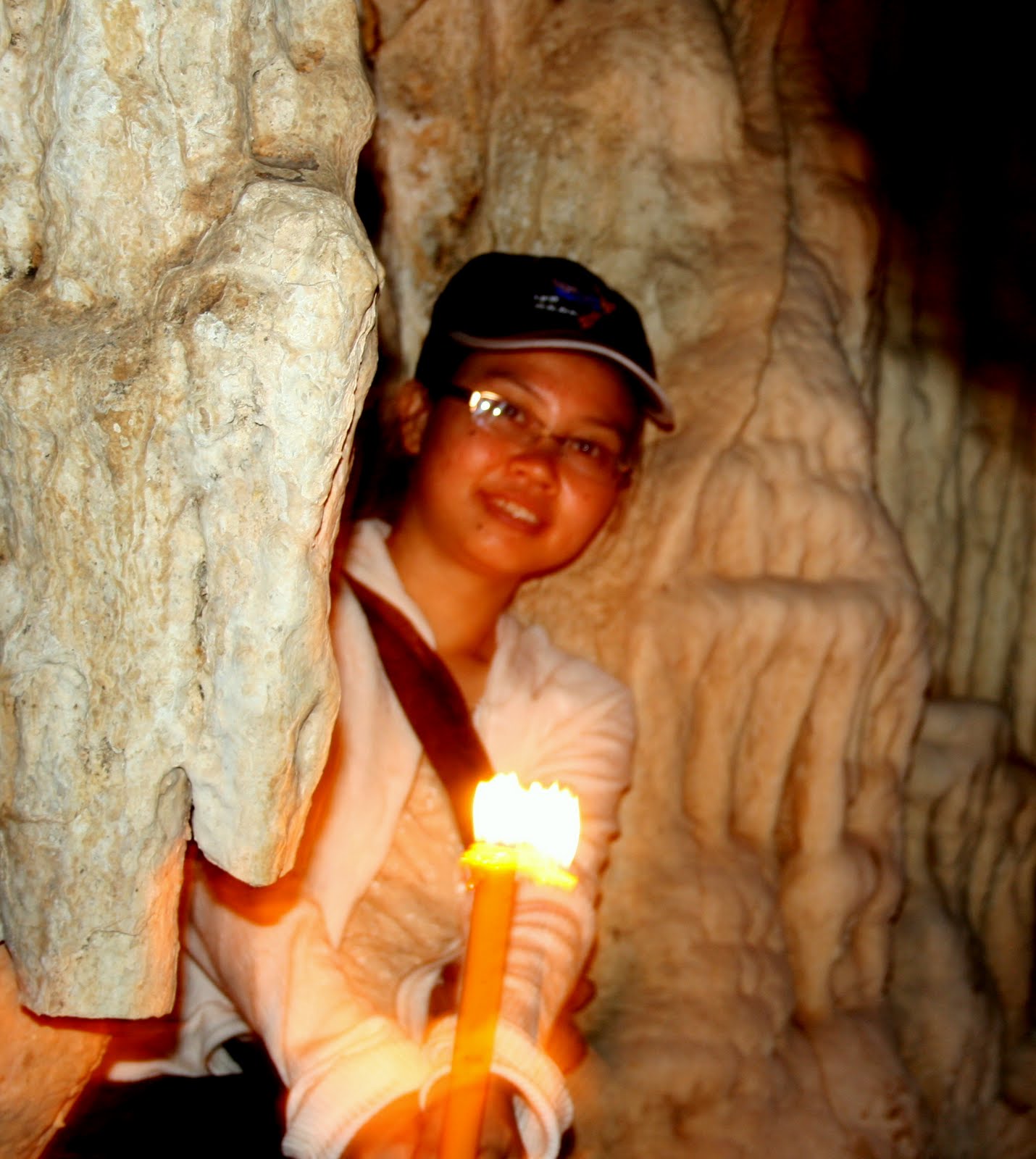
Cath with her candle stood beside the mast of the rock 


Instructor Dinny


He made his eyes like Satan from the cave,,,lol 


Pastor Michael with his candle


He looked tired so he sat in the big stone, looked at the camera and asked me to photo him ^__^

Ellendra and Arifin was sitting on the big stone inside the cave 

Princes


This a thorn which it has been comes out from the wall of cave


NoVaN's head almost hit the wall of cave because she was looking at camera 


Kunait is new member who just joined in CNL Hirosi Club

Pr. Michael was trying to comes out from very narrow cave


Chinese

Thai


This is the gate to exit


hupz,,,,ada mace disini

Pastor Michael


Cambodian

He was trying to kill him-self  ^_^

Thorn (in Bahasa called "duri")


Zambian/PriNceS


Mace Zambian and Pace Melanesian


Group picture with the society around there


Bungsu was trying to get the camera but she couldn't

Bungsu pu gaya sj hehehe,,,,

The Chinese soldier just comes out from the forest ^_^


I took all these beauty nature where we coming back from cave to dorm


on the way to coming back 

In front of gate

Complex university 


Group picture before hiking


Observer


Mace trada makanan ka jd makan ibu jari?? lol